Part Two:
Five of the most Collectible
2019 Brunello Riservas
Highs from the Hill of Montalcino
Part Two: Five of the most Collectible 2019 Brunello Riservas, and Bonus Drinker’s Guide to Rosso di Montalcino Current Releases
By John Szabo MS
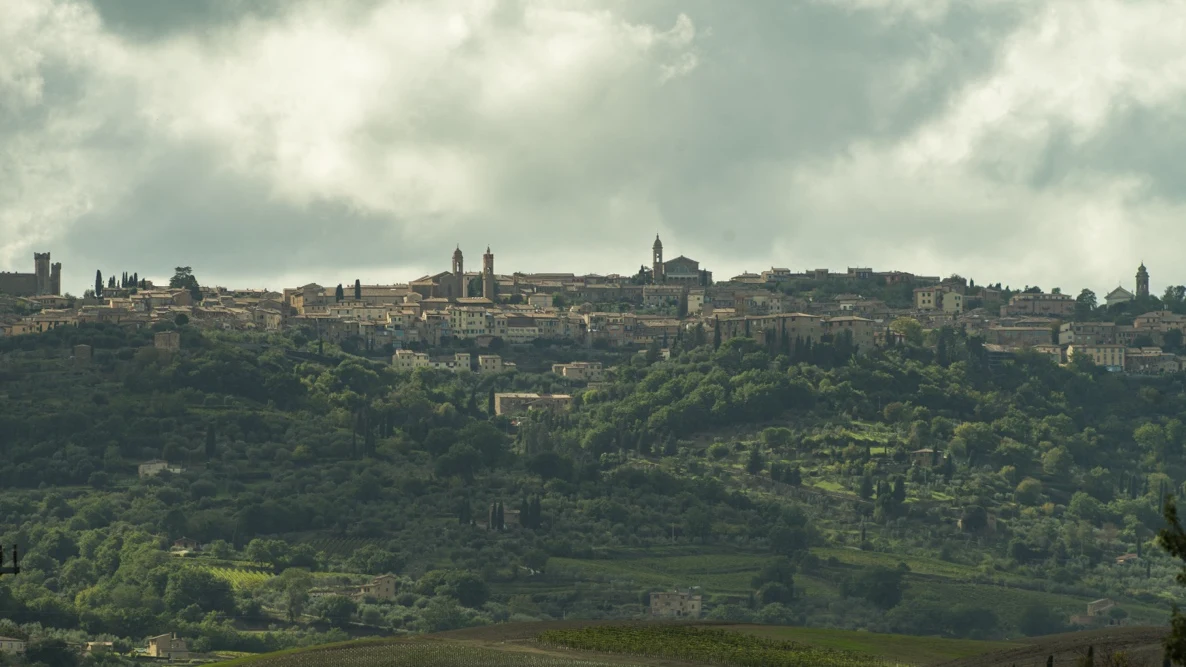
Montalcino
If you missed part one, click below:
Check out: Highs from the Hill of Montalcino Part One: Five of the most Collectible Brunello 2020s
2019 Vintage: “Perfect Conditions”
2019 is considered one of the finest vintages of the century in Montalcino so far, alongside 2010, 2015, and especially 2016. Hayo Loacker of Corte Pavone describes it thus: “Everything was just right. Nature, the vines, and us: we were one. Nature gave us an uncomplicated year. The vines had enough water to grow, warmth to develop, and a big difference in temperature from day to night to ripen the grapes - the perfect conditions to produce great wines”.
Biondi-Santi’s Director of Viticulture and Winemaking, Federico Radi, was similarly effusive: “Rainfall was in line with the ideal at Tenuta Il Greppo [the name of the Biondi Santi property], pretty much perfect. And an unusually cool July and September kept vines healthy and unstressed, while low humidity also aided maturation and concentration”.
The most exciting thing about 2019, aside from near perfect weather, was the fact that it arrived in an era of highly advanced viticulture and winemaking techniques, refined in recent years, making the 2019s generally better than even the best 2010s. And from my experience tasting the 2019 annatas last year and the riservas this year, the hype is justified. These are magnificent wines, built to age.
Here are five estates that got everything right in 2019. These wines should be in every collector’s cellar.
Collector’s Guide: Brunello di Montalcino Riserva 2019
CASTELLO ROMITORIO
Castello Romitorio was founded in 1984 by Sandro Chia, an Italian artist known for his role in the late 20th century Transavantgarde movement. Born in 1946 in Florence, Chia has enjoyed wide international recognition for his work, often drawing inspiration from mythology, history, and the human figure, creating a unique style that resonates with the Italian Renaissance. Unsurprisingly, art features prominently at the beautiful Romitorio estate, like an open-air museum showcasing a synergy between his artistic vision and viticulture.
Son Filippo Chia started the second chapter of the estate in 2006, building on, and expanding and refining his father’s work. Today Romitorio’s Brunellos are a celebration of sleek, refined elegance, always among the top bottlings of each vintage.
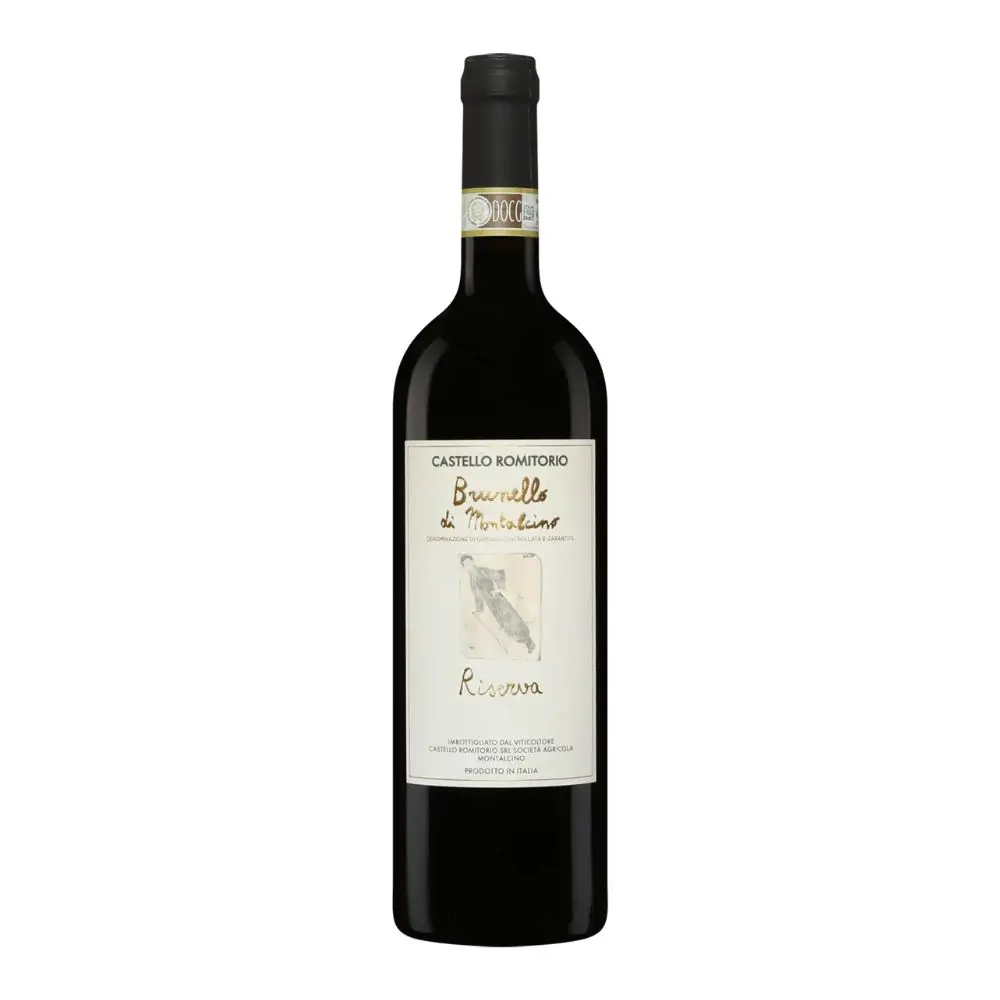
Castello Romitorio Brunello di Montalcino Riserva 2019
98 Points
The white label of Romitorio’s Riserva depicts a small ‘acquaforte’ by Sandro Chia from the late 1970s. This is one of his earliest figurative works and portrays a young man with a walking stick, blending the real with the surreal and symbolizing wisdom and knowledge, perseverance and patience, tradition and beauty. The 2019 Riserva is all that, a near-perfect wine with its sweet red berry perfume leading on a marvellously structured and proportioned palate, with terrifically succulent acids, and fine-firm tannins. Length and depth are exceptional, as is the succulence and genuine flavour density, not to mention the high sapidity. It should be best from about 2027-2040+; it has the stuffing to go long term without concern.
POGGIO DI SOTTO
Piero Palmucci acquired the Poggio di Sotto estate in 1989, a ridge-top property southeast of Castelnuovo dell’Abate in the southeastern part of Montalcino, releasing his first Brunello from the 1991 vintage, and the first Riserva from 1995. Grapes came from old vineyards planted in the 1960s with only one variety, sangiovese. However, later discovered through ampelographic research, 182 distinct biotypes of the grape were catalogued, an exceptional degree of biodiversity, which undoubtedly contributes to the brilliance and complexity of the estate’s wines.
Poggio di Sotto also had the gifted hand of Giulio Gambelli to craft the wines in those years, widely considered one of the foremost masters of sangiovese. In my tastings of new releases at Benvenuto Brunello over the years, Poggio di Sotto always featured in the top wines of each vintage, among the purest and most ethereal examples.
Thus, the news that Palmucci had sold Poggio di Sotto to Italo-Swiss industrialist Claudio Tipa in 2011 was met with some trepidation – would the beloved estate maintain its quality? Will the much-loved style change?
Tipa, whose wine holdings also include his initial foray into the business at ColleMassari in Montecucco, followed later by Grattamacco in Bolgheri and his latest acquisition, neighboring Montalcino estate Tenuta San Giorgio in 2016, quickly assuaged all fears with his early releases. Poggio di Sotto remains a paradigm of delicacy and finesse, and the 2019 Riserva is easily one of the year’s best.
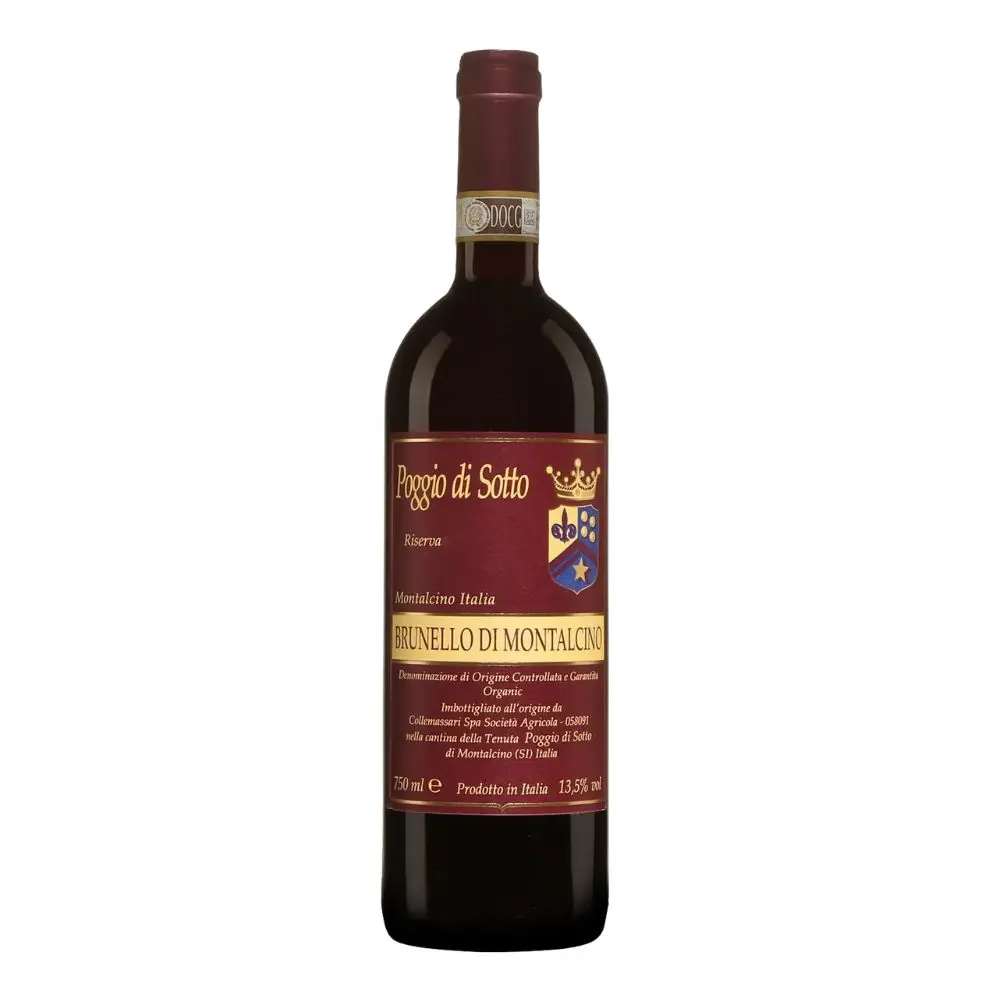
Poggio di Sotto Brunello di Montalcino Riserva 2019
98 points
From vineyards bathed in the cooling evening breezes descending from Monte Amiata to the south, this is a classically pale, perfumed, delicate and refined Brunello, dusty, with red fruit and savoury herbs leading. The palate is delicate but powerful and dense, with tremendous length, and such complexity! It’s a study in depth allied to refinement, with brilliantly extracted tannins and racy acids, a triumph of the vintage. Best from 2027 – it’s drinking so well now but will obviously develop positively over the next decade and hold even longer. A top 2019 Riserva.
SESTI
On one of my first visits to Montalcino almost 20 years ago I met a remarkable man named Giuseppe Maria “Giugi” Sesti in the hamlet of Argiano. He was not a winemaker by trade, nor even from a winemaking family, but rather an artist and astronomer from Venice. He had met his future wife in Wales while writing his first book on the topic, and in 1975, decided to move the family to Tuscany where they bought the abandoned ruins of the 13th century Castello di Argiano. Buildings were slowly restored and lands cleared, with the first vineyards planted on the slopes around the castle in 1991.
Giugi’s wines were natural from the beginning, long before it became fashionable. I recall tasting the flavourful but delicate liquid from cask, such a pure expression of sangiovese as I had never experienced it. I learned how the wines are inspired by the stars. You could say; Sesti’s flagship Brunello Riserva called Phenomena has dedicated each vintage to a celestial event, with label art changing to reflect the inspiration. The 2018, for example, celebrates the largest total eclipse of the Moon this century, a " Blood Moon", on the 27th July 2018, not seen since 1844. The label features a full, blood red moon.
Daughter Elisa would join the estate full time in 1999, becoming an active partner in all aspects of the vineyard management and winemaking. Giugi passed on to the stars in 2024, but the estate is in excellent hands, and the philosophy unchanged.
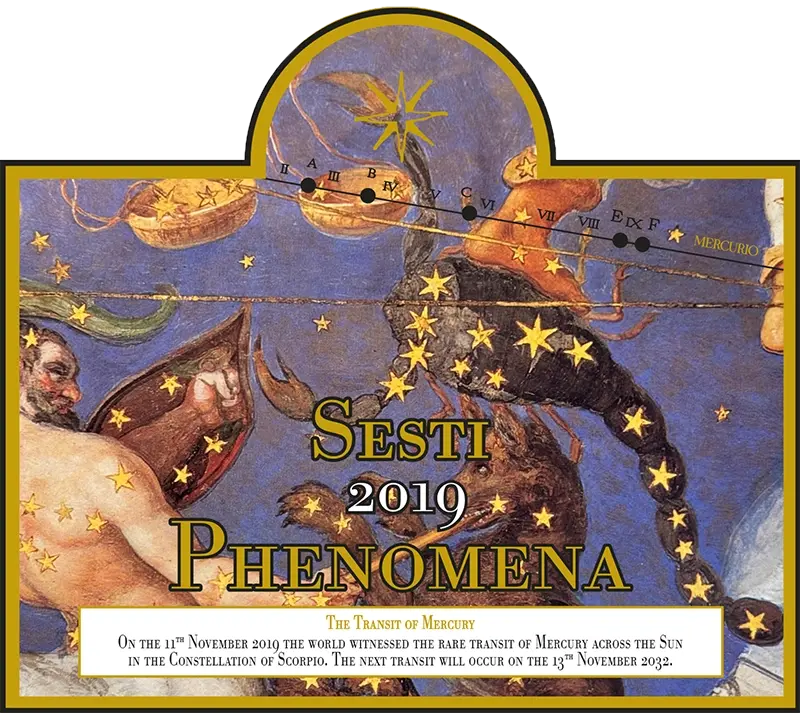
Sesti Brunello di Montalcino Riserva Phenomena 2019
98 points
On November 11, 2019, the world witnessed a rare transit of Mercury, where the planet appeared as a small, dark dot crossing the sun's face, a celestial event that won’t occur again until 2032. Such was the astronomical inspiration for Sesti’s 2019
Phenomena label, indeed a phenomenal wine, so graceful and elegant, firm, taut, fresh and racy, vibrant and alive. I love the energy coursing through this wine, the terrific length, the exceptional depth. Sesti's top bottling is a triumph of this excellent vintage.
MASTROJANNI
Gabrielle Mastrojanni was among the first to recognize the potential to make outstanding Brunello di Montalcino in the deep, southeastern corner of the appellation near the Abbey of Sant’Antimo in Castelnuovo dell’Abate. In 1975, he purchased two properties, San Pio and Loreto, to create the Mastrojanni estate; the holdings included the Vigna Schiena d’Asino, a single vineyard that today remains the flagship bottling of Mastrojanni. In 2008, the Illy Group of coffee fame acquired the estate and set about investing in a new cellar and eventually a Relais and Restaurant.
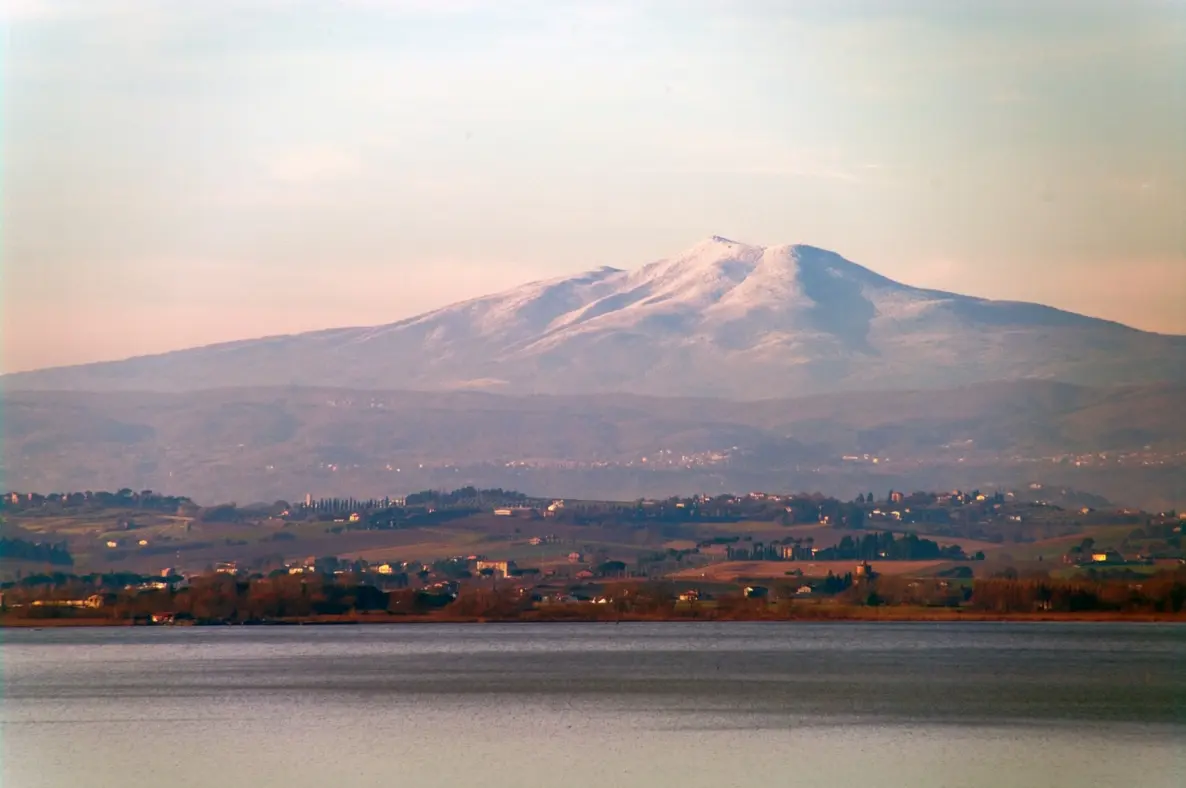
Monte Amiata (visittuscany.com)
Today, the estate extends over 110 hectares, with 42 hectares of vineyards planted on a mosaic of soils with elevation ranging from 180 to 420 meters, surrounded by wooded areas, olive groves, orchards, and a vegetable garden. The dormant Monte Amiata volcano rising to 1,738 meters to the south is the critical climate moderator: cool night breezes descending from its slopes refresh the vines, while during the day, the updrafts generated on its slopes help to divert storms.
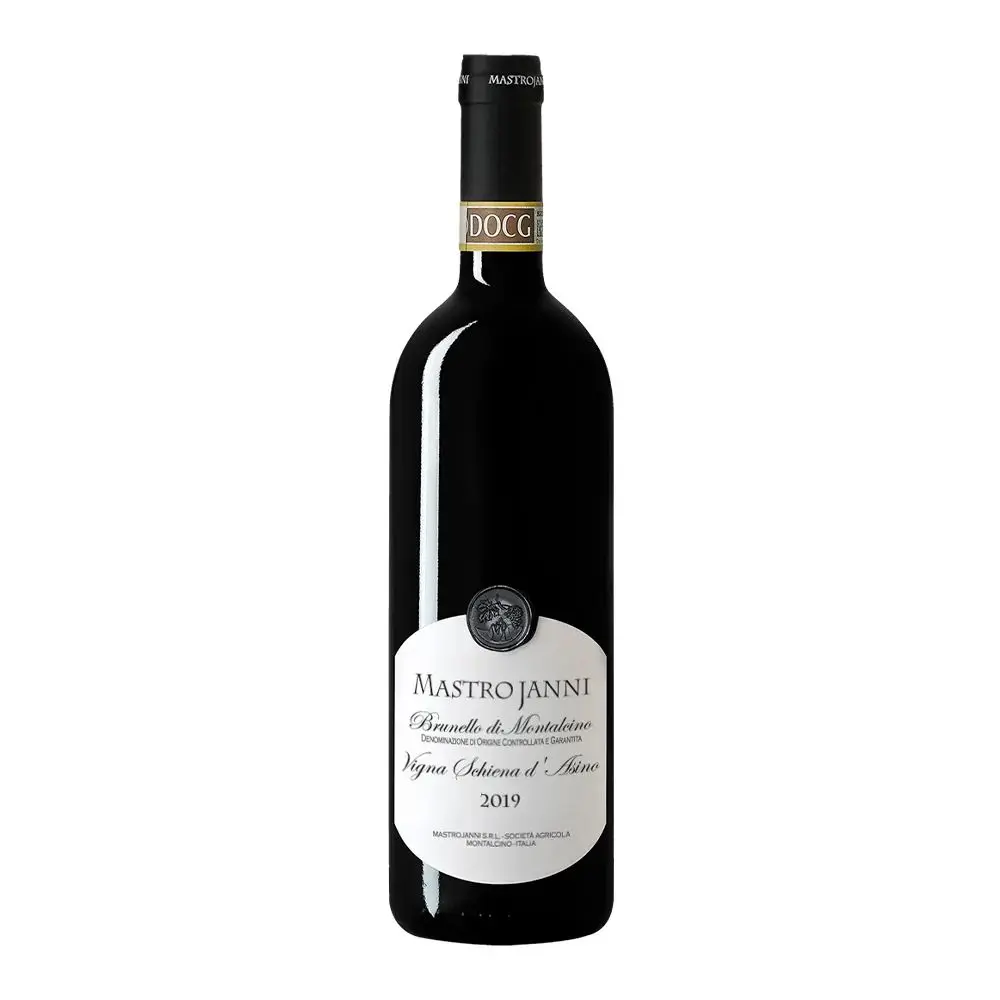
Mastrojanni Brunello di Montalcino Riserva Vigna Schiena d'Asino 2019
97 points
The Vigna Schiena d’Asino (“donkey’s back”) lies on a south-facing ridge up to nearly 400 meters, planted in 1975 on mainly sandstones looking across to the Monte Amiata. It was first bottled on its own in 1990 and today remains Mastrojanni’s top cru. The exceptional 2019 Riserva aged for 42 months in large oak cask (1600l and 2500l), and delivers a big, broad, bold and high-volume nose, a complete and complex, mouthfilling cru with loads of fruit extract - wow there's tremendous depth and density here, ripe yes, wood influence, yes, but all so well measured in high concentration and balance. Excellent length. Top notch 2019 to be sure. Best from 2028.
COLLEMATTONI
The Collemattoni estate takes its name from a 17th century hilltop farmhouse on the property on the south side of Montalcino, a short distance from the village of Sant’Angelo in Colle. The estate is run today by Marcello Bucci, whose family history in the region stretches back to the late 19th century. In line with the times, Collemattoni produces 80% of its electricity needs from solar panels and a biomass-fuelled heating system, and also employs a rainwater recovery system.
11 hectares of vineyards in five separate areas in the southwest and southeast of the denomination are planted to mostly Sangiovese, including the tiny, half-hectare Fontelontano vineyard between Sant’Angelo in Colle and Collemattoni at 380 meters elevation. The vineyard name derives from the presence of a water source that used to supply locals travelling long (“lontano”) distances to fill their jugs. It’s Collematoni’s oldest vineyard planted in 1984 and is used in the best vintages to produce the estate’s only Brunello di Montalcino Riserva.
I find Collemattoni’s Brunellos generally fall on the more modern end of the spectrum, which is to say, smooth and polished, very ripe, with measured oak influence thanks to aging in 500l French oak tonneaux in the case of the Riserva. Compared to the other Brunellos in this report, this is the wine that will satisfy fans of a more bold, plush style.
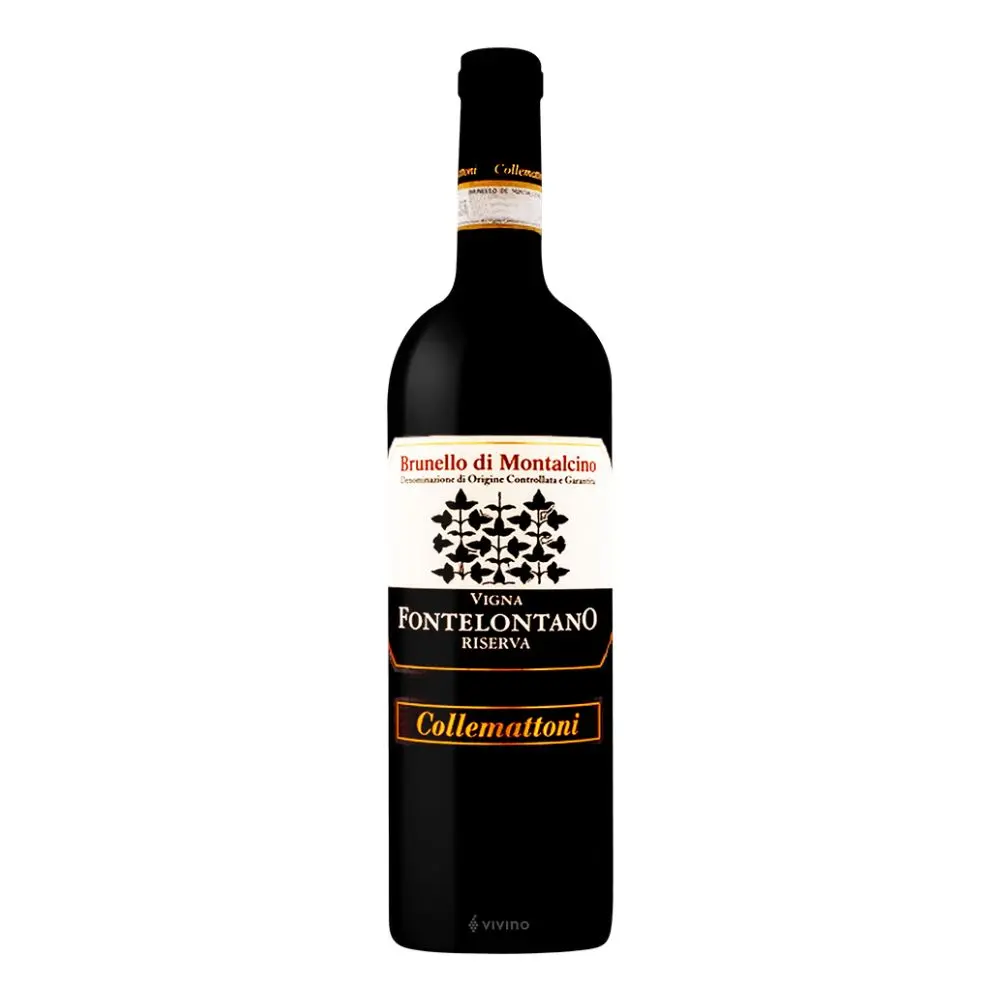
Collemattoni Brunello di Montalcino Riserva Vigna Fontelontano 2019
97 points
Aged 36 months in French oak tonneaux, Collemattoni's 2019 Fontelontano Riserva is already quite developed aromatically with advancing fruit character, clearly very ripe with some alcoholic heat, though still holding on to tightly wound tannins on the palate, as yet unresolved. There's considerable depth underlying the ensemble in a bold, ripe, and satisfying style, still a good 5 years away from prime. Lots to go on here, and promise.
Drinker’s Guide: Rosso di Montalcino Current Releases
And while you’re waiting for the magnificent 2020s and 2019s Brunellos to come into prime drinking, sate your Montalcino musts with these excellent Rossos.
Corte Pavone Rosso di Montalcino 2022
92 points
Each of the 80 parcels on the Corte Pavone estate is destined for a certain wine, including this Rosso. The 2022 is a serious wine to be sure, ripe, bold and muscular, very much on the darker fruit side of the spectrum, with wood noted, (aged in medium sized cask and some tonneaux). The palate is broad and plush, mouthfilling, closer to Brunello in style than typically fruity rosso - nothing simple and fruity about this. Long finish, great structure, an ageworthy example.
Le Potazzine Rosso di Montalcino 2023
91 Points
An immediate and fruity, ripe and juicy rosso, concentrated, fine but with tight and dense tannins - a great example! Such presence and delightful zestiness. Length is good.
San Polo Rosso di Montalcino 2022
91 points
A 100% whole bunch fermented sangiovese, aged 20% in amphora, this is lively, fresh, and herbal. Working on fruit and freshness - mission accomplished. Such energy and tension. Tannins are fine and grainy; length is very good to excellent in this category.
Biondi-Santi Rosso di Montalcino 2021
91 points
A lively, fresh rosso with notable spicy character, indeed more savoury than fruity, with fluid, firm texture, lovely acids, big structure, still quite tightly wound, and long finish. There's a touch of smoke and scorched earth - this is not designed to be an easy and fruity wine by any means, and should age well, even if winemaker Federico Radi suggests starting to enjoy it from now. I would wait another year or two minimum. Aged one year in a large, old cask.
Val di Suga Rosso di Montalcino Vigna Spuntali 2021
90 points
2021 marks the first vintage of this single vineyard Rosso, from lower parts of the Spuntali vineyard on sandier soils, aged 6 months in large wood followed by a year in concrete. And this '21 is the current vintage, released when many estates have already moved on to the 2022s, and I can see why it's held back. It's still a little reductive on the nose, woolly, not as developed as one would expect, but the fruit is still very lively fresh and ripe, but not exuberant, a restrained example with good structure and savoury elements. It doesn't have the depth of a Brunello, nor the ease and fruit of a rosso, but finds itself in a twilight between. Not a wine to seek out if you're looking for generous fruit in any case. I recommend decanting if serving now. It sells for about the same price as Val di Suga's basic Brunello.
That’s all for this report, see you ’round the next bottle.

John Szabo, MS